
Choosing the right Mobile app development company in Australia is an important decision for any business planning to build a mobile application. Whether you are launching a new digital product, creating an app for customers, or modernising an existing business process, the development partner you choose can directly affect the app’s quality, security, scalability, cost and long-term performance.
With many mobile app developers in Australia offering different technologies, pricing models and development approaches, comparing companies based only on price is rarely enough. Businesses need to evaluate technical expertise, relevant experience, communication, design capabilities, security, project management and ongoing support.
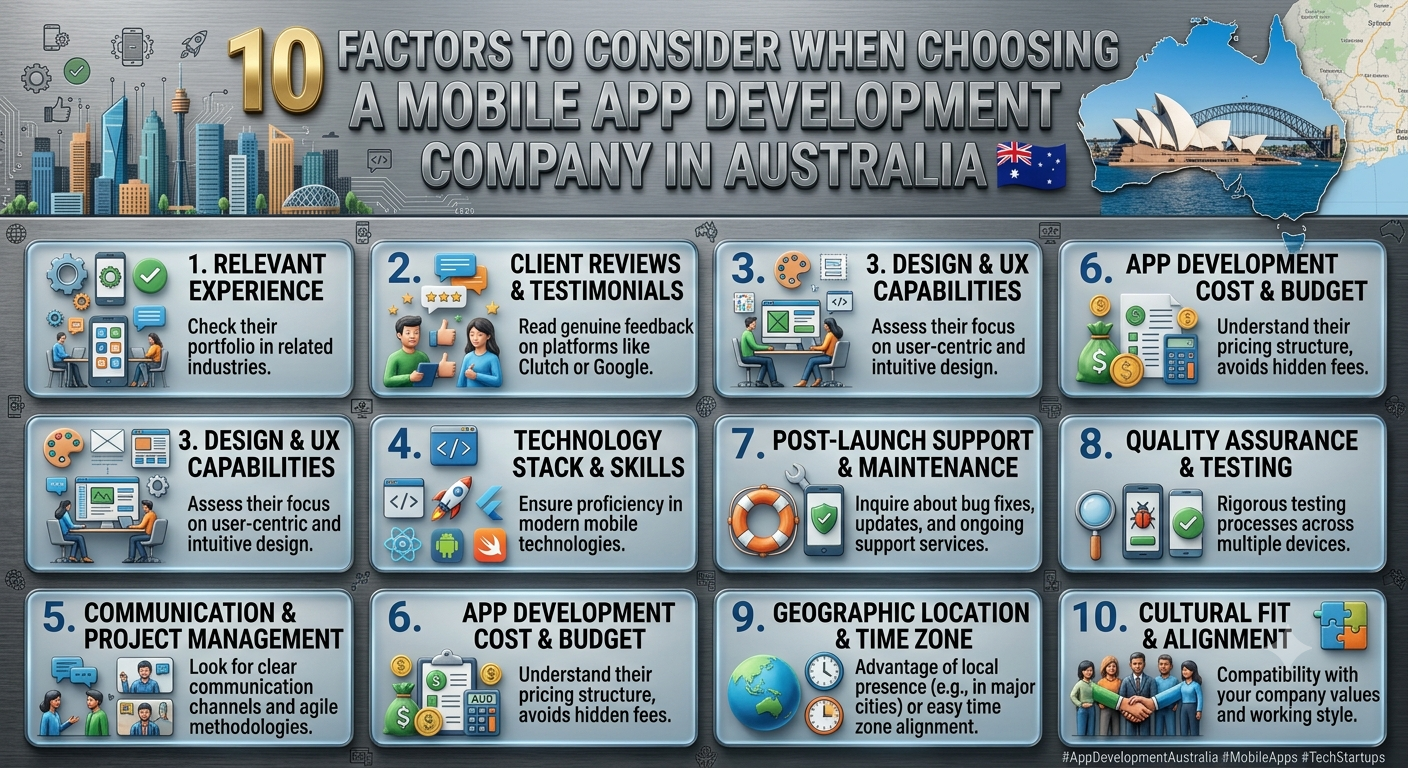
This guide explains the key factors Australian businesses should consider when choosing a mobile app development company.
Why Choosing the Right Mobile App Development Company Matters
A mobile application is more than just a piece of software. It can become an important part of your customer experience, sales strategy or internal business operations.
The right development partner can help you:
- Turn your business idea into a practical mobile application
- Select suitable technologies and development frameworks
- Create a user-friendly mobile experience
- Integrate the app with existing business systems
- Build secure and scalable software
- Launch the application efficiently
- Maintain and improve the app after launch
- On the other hand, choosing a development company without properly evaluating its capabilities can lead to unclear requirements, development delays, unexpected costs, technical problems and expensive redevelopment.
For Australian businesses, working with a development partner that understands your market, customers and business requirements can make the development process significantly easier.
Native vs Cross-Platform App Development
Australian businesses often need to decide whether to develop separate native applications or use a cross-platform framework.
Native App Development
Native applications are developed specifically for a particular operating system.
For example:
- iOS applications can be developed using Swift.
- Android applications can be developed using Kotlin.
Native development can provide strong platform integration and performance, particularly for applications requiring advanced device-specific functionality.
Cross-Platform App Development
Cross-platform technologies such as Flutter and React Native allow businesses to develop applications for multiple platforms using a shared codebase.
Potential advantages include:
- Faster development
- Code reuse
- Easier maintenance
- Potentially lower development costs
- Simpler multi-platform deployment
The best option depends on your business requirements. A professional app development company in Australia should assess your project before recommending an approach.
Assess Their UI/UX Design Capabilities
A technically powerful application can still fail if users find it difficult to navigate.
Ask whether the development company provides UI/UX design as part of its services or works with dedicated designers.
A strong mobile app design process should consider:
- User journeys
- Navigation
- Accessibility
- Mobile usability
- Screen layouts
- Interaction design
- Branding
- Prototyping
- User testing
The goal should be to create an application that is easy for your customers or employees to understand and use.
Understand Their Development Process
Before signing a contract, ask the company to explain how it manages projects.
A structured process may include:
- Business and technical discovery
- Requirements gathering
- User experience planning
- UI design
- Technical architecture
- Development
- Testing
- Deployment
- Monitoring
- Ongoing maintenance
Ask how often you will receive project updates and how changes to requirements will be handled.
Clear processes reduce misunderstandings and make it easier to track project progress.
Check Their Security Practices
Mobile applications can process sensitive customer, business and financial information. Security should therefore be considered from the beginning of development rather than added at the end.
Ask potential developers about:
- Secure authentication
- Data encryption
- API security
- Secure database architecture
- Access controls
- Vulnerability testing
- Secure payment integrations
- Data protection
- Security updates
Australian businesses should also consider their specific legal, regulatory and industry requirements when handling customer information.
A development company should be able to explain how security will be incorporated throughout the application lifecycle.
Look at Their Integration Capabilities
Many business applications need to communicate with existing software.
For example, a mobile application may need to connect with:
- CRM platform
- ERP system
- Accounting software
- Ecommerce platforms
- Payment gateways
- Customer databases
- Cloud services
- Marketing platforms
- Internal business systems
This is why custom mobile app development in Australia often requires more than mobile development alone.
Ask prospective developers about their experience with APIs, third-party systems and custom integrations.
Consider Scalability
Your application may start with a small number of users but grow significantly after launch.
The development architecture should therefore be capable of supporting future growth.
Discuss:
- Expected user numbers
- Cloud infrastructure
- Database architecture
- API performance
- Application monitoring
- Feature expansion
- Multi-region requirements
- Future integrations
A scalable architecture can make future development easier and help prevent expensive technical redevelopment.
Compare Pricing Carefully
Cost is an important factor, but the cheapest development quote is not necessarily the best option.
Mobile app development costs can vary considerably depending on:
- Application complexity
- Number of platforms
- Design requirements
- Backend development
- Integrations
- Security requirements
- Third-party services
- Development team structure
- Testing requirements
- Ongoing maintenance
When comparing quotes, make sure you understand exactly what is included.
Ask whether the quoted price covers:
- UI/UX design
- Development
- Testing
- Deployment
- App store submission
- Backend infrastructure
- Third-party integrations
- Maintenance
- Post-launch support
A transparent proposal makes it easier to compare providers fairly.
Evaluate Post-Launch Support and Maintenance
Launching your application is not the end of development.
Mobile operating systems, devices, security requirements and third-party services change over time. Your application may also need new features based on customer feedback.
Ask whether the company provides:
- Bug fixes
- Performance monitoring
- Security updates
- OS compatibility updates
- Feature enhancements
- Technical support
- Application maintenance
Long-term support can help keep your application reliable after launch.
How Much Does Mobile App Development Cost in Australia?
There is no single price for developing a mobile application because every project has different requirements.
A simple application with limited functionality may require considerably less development work than a complex platform involving multiple user types, real-time functionality, payment processing, APIs and cloud infrastructure.
Instead of focusing only on the headline price, Australian businesses should compare the total project scope and expected business value.
Before requesting quotes, prepare information about:
- Target users
- Core features
- Required platforms
- Design requirements
- Integrations
- Security requirements
- Expected launch date
- Future functionality
The more clearly the requirements are defined, the easier it is for development companies to provide meaningful estimates.
How Long Does It Take to Build a Mobile App?
The development timeline depends on the application’s complexity.
A typical project may involve:
Discovery → UX/UI Design → Development → Testing → Deployment → Maintenance
Simple applications can be developed relatively quickly, while larger applications may require several development phases and significantly more testing.
Factors that can affect the timeline include:
- Number of platforms
- Number of features
- Design complexity
- Backend requirements
- API integrations
- Third-party services
- Testing requirements
- Security requirements
- Client feedback and approvals
A reliable development company should provide a realistic project timeline after understanding your requirements.
Red Flags to Avoid When Hiring an App Development Company
Be cautious if a company:
- Promises an unrealistically short development timeline
- Provides an unusually low quote without explaining the scope
- Cannot demonstrate relevant previous work
- Avoids discussing security
- Cannot clearly explain its development process
- Has unclear ownership arrangements
- Provides little information about post-launch support
- Does not communicate project risks
- Cannot explain its recommended technology choices
A professional development partner should be transparent about both opportunities and potential challenges.
A Simple Checklist for Australian Businesses
Before choosing a mobile app development company, evaluate:
- Relevant mobile development experience
- Strong portfolio
- iOS and Android capabilities
- Appropriate technology expertise
- UI/UX design capabilities
- Secure development practices
- API and integration expertise
- Scalable architecture
- Transparent pricing
- Clear project timeline
- Defined communication process
- Post-launch support
- Clear intellectual property ownershipUsing this checklist can help Australian businesses compare development providers more effectively.
Why Choose Webbrains for Mobile App Development in Australia?
For businesses looking for mobile app development services in Australia, Webbrains can help turn an application concept into a practical digital solution.
Our approach focuses on understanding business requirements before selecting the appropriate technology and development strategy. This can include application planning, UI/UX design, custom development, integrations, testing, deployment and ongoing support.
Whether you are a startup developing a new digital product or an established Australian business looking to improve an existing process, the right development strategy can help create an application that is secure, scalable and aligned with your business objectives.
Frequently Asked Questions
How do I choose the best mobile app development company in Australia?
Compare companies based on relevant experience, portfolio quality, technical capabilities, development process, security, communication, pricing, scalability and post-launch support. Choose the company that best matches your business requirements rather than simply selecting the lowest quote.
What should I look for in an Australian mobile app developer?
Look for experience with your type of application, strong technical skills, a proven portfolio, good communication, secure development practices, integration expertise and ongoing maintenance capabilities.
How much does mobile app development cost in Australia?
The cost varies depending on application complexity, platforms, features, design, integrations, security requirements and development time. A detailed project scope is required to obtain a meaningful estimate.
Should I develop an iOS or Android app first?
The answer depends on your target customers and business objectives. Analyse your audience, market opportunity, required functionality and budget before deciding which platform to prioritise.
Is Flutter suitable for mobile app development?
Flutter can be suitable for many businesses that want to develop applications for multiple platforms using a shared codebase. However, the right technology should be selected based on the application’s functionality, performance and long-term requirements.
Do mobile apps require ongoing maintenance?
Yes. Mobile applications may require updates for new operating-system versions, security improvements, bug fixes, performance optimisation and new features.
How long does it take to develop a mobile application?
The timeline depends on the scope and complexity of the application. Requirements, design, development, integrations, testing and deployment all influence the final timeline.
Final Thoughts
Choosing the right mobile app development company in Australia requires more than comparing prices. Businesses should evaluate technical expertise, relevant experience, design capabilities, security, integrations, scalability, communication and long-term support.
A well-defined development process and a suitable technology strategy can reduce project risks and create a stronger foundation for future growth.
Before selecting a development partner, clearly define your objectives, compare multiple providers and ask detailed questions about their experience, process, pricing and support.
For Australian businesses planning a new mobile application, choosing the right development partner can be one of the most important decisions in turning a digital idea into a successful product.